
Blogs

Through the Lens of Change: My Time as a Photographer in Wilmington
In the late sixties and early seventies, Wilmington, North Carolina, was a city caught between the fading echoes of Jim Crow and the uncertain dawn of a new era. As a young news photographer, I witnessed the turbulence firsthand, capturing race riots and the raw emotions they ignited.
But my story goes beyond the images. I teamed up with an Episcopalian priest, an unlikely friend and a man struggling with alcoholism, to create a theater in his church’s basement. I painted a mural, hoping to bring light to a dark time. However, life took a harsh turn. A painful divorce, fueled by a vengeful mother-in-law with Klan ties, made Wilmington increasingly dangerous for me. The church was burned down, and the priest disappeared, leaving me to face threats alone.
Eventually, I had to leave, hitting the road with little more than the lessons learned from those tumultuous years. This memoir captures that pivotal time in my life—a time of fear, art, and survival.

A Journey of Redemption: Finding Connection in Unexpected Places
When faced with a terminal diagnosis, the desire to experience one final adventure often outweighs the fear of the unknown. For a Vietnam vet and ex-Marine, the road to the Grand Canyon became more than just a journey through the landscape; it became a path to unexpected companionship and reflection.
As an old man with no family left and a wealth of memories, his life felt like it was closing in on him. But the open road offered a sense of freedom that he hadn’t felt in years. It was at a truck stop, somewhere along the way, that he met her—a young black woman working as a prostitute. Instead of seeking physical comfort, he longed for something more profound: a human connection. He paid her not for her body, but for her company.
Their night together wasn’t about lust; it was about the simple act of being with another person. In the morning, he offered her a job as his companion for the rest of his journey. She accepted, and what began as a transaction slowly transformed into something deeper. As they traveled together, sharing stories of their vastly different lives, trust began to build. He opened up about his time in Vietnam, his successful career as a statistician, and the loneliness that had defined his later years. She revealed the struggles that had led her to the life she was living.
The looming shadow of his impending death brought a new clarity to his life. He began to see the world—and the people in it—with fresh eyes. Their journey wasn’t just about reaching the Grand Canyon; it was about finding redemption, understanding, and a sense of peace before the inevitable end.

Lessons from the Road: Embracing Life in the Face of Death
As he journeyed toward the Grand Canyon, the old man realized that this trip was about more than just seeing a natural wonder—it was about embracing life in the face of death. The unexpected companionship of a young woman he met along the way brought a new perspective to his final days.
Their unlikely friendship was born out of a simple transaction, but it evolved into something more meaningful. With each passing mile, they shared their stories, their fears, and their dreams. For the old man, this journey was a chance to reflect on a life well-lived, yet incomplete. For the young woman, it was an opportunity to escape her current reality, even if only for a while.
The old man’s terminal diagnosis had stripped away his fear, allowing him to approach each day with a newfound appreciation for the present moment. He found himself offering advice, not as an old man with nothing left to lose, but as someone who had gained wisdom through his experiences. The young woman, in turn, began to see him not just as a client, but as a mentor and friend.
As they neared the Grand Canyon, the vastness of the landscape mirrored the vastness of the lessons they had learned from each other. It was a reminder that life, no matter how fleeting, is filled with moments of beauty and connection—if only we are open to them.

A Marine's Journey: "Fighting the Shadow Warriors" and the Realities of Vietnam
War leaves an indelible mark on those who fight it, and few conflicts have been as controversial or deeply felt as the Vietnam War. In “Fighting the Shadow Warriors: A Marine in Vietnam,” Harry Knickerbocker offers readers a raw, unfiltered look into the life of a Marine battling not just the enemy, but also the internal and external forces that defined this brutal conflict.
The book begins with the protagonist’s arrival in Vietnam, where the reality of war immediately sets in. Knickerbocker’s narrative pulls no punches in describing the daily struggles faced by soldiers—from navigating the treacherous terrain to surviving ambushes and building tenuous relationships with local villagers. The psychological strain of guerrilla warfare is palpable throughout the story, as the protagonist and his fellow Marines grapple with the ever-present threat of the unseen enemy.
Knickerbocker masterfully captures the intense operations and the moral dilemmas that arose in the heat of battle. The author doesn’t shy away from the harsh truths of war: the brutality, the senseless violence, and the lasting scars it leaves on those who serve. Yet, amid the chaos, he also highlights the incredible resilience and camaraderie that soldiers develop in the face of unimaginable adversity.
“Fighting the Shadow Warriors” serves as both a tribute to the strength of the Marines and a critical reflection on the Vietnam War’s enduring impact. Through personal anecdotes and key moments, Knickerbocker provides a poignant reminder of the human cost of war and the complex legacy it leaves behind.
For anyone interested in military history or seeking a deeper understanding of the Vietnam War, this book offers a compelling and thought-provoking read. It’s a stark reminder of the sacrifices made by those who served and the heavy toll of conflict on the human spirit.
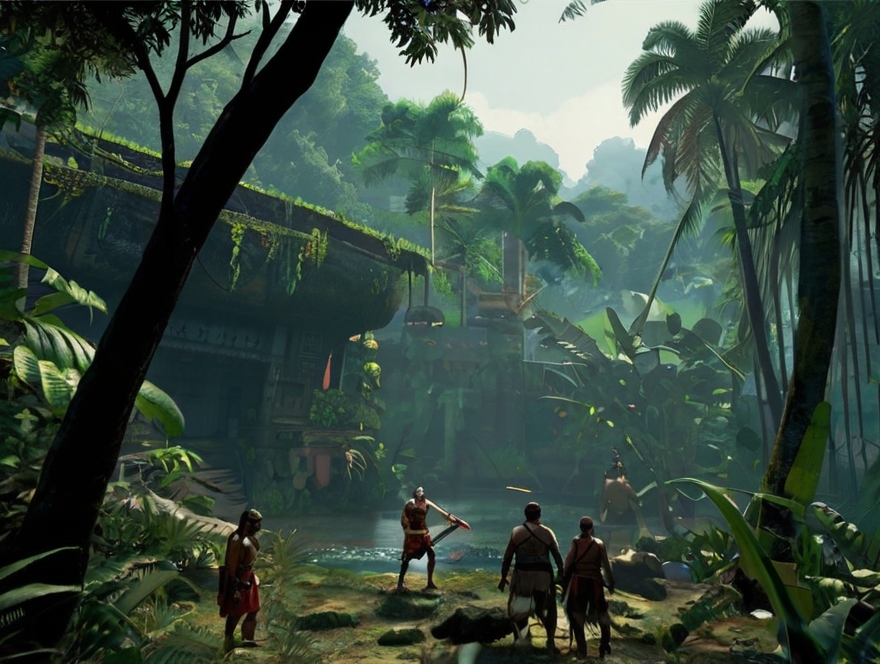
Into the Circle: Love, War, and Identity in the Jungle
In the heart of a remote jungle, a strange and deadly tradition unfolds—a lethal game that defines the lives of a warrior tribe. In “The Circle Game,” Goodslayer, a curious outsider, finds himself caught in a world where survival is tied to an ancient ritual that pits tribe against tribe. This captivating tale explores the tension between individuality and the pull of a greater cause, all set against the backdrop of a brutal yet mysterious tradition.
Goodslayer’s journey begins with simple curiosity, leading him to a jungle village where the Circle Game is not just a sport, but a way of life. The game, with its fatal stakes, sees small teams of warriors competing, often leading to tragic casualties. The fallen are honored in a unique way—buried in a communal cemetery where a special vine is planted on their graves. This vine produces leaves that, when brewed into a tea, grant the women of the tribe special powers. This cycle of life, death, and rebirth is central to the tribe’s existence.
Despite his initial reluctance, Goodslayer is drawn into the game. He is conflicted, believing that the deadly tradition should be stopped. Yet, as he becomes more deeply entwined with the tribe, and out of love for a woman, he decides to fight. The story delves into the complex emotions that arise from this decision—the struggle between preserving his individuality and losing himself to the tribe’s collective cause.
Through the Circle Game, Goodslayer learns profound lessons about love, sacrifice, and identity. The tension between the desire to stand apart and the pull to belong is a universal theme that resonates deeply throughout the narrative. In the end, Goodslayer embraces the game, not just as a warrior, but as someone who has come to understand the delicate balance between self and community.
This book is a gripping exploration of the human spirit, questioning how far one should go in the name of love and loyalty. “The Circle Game” offers a thought-provoking read that challenges our notions of identity, tradition, and the sacrifices we make for those we care about.